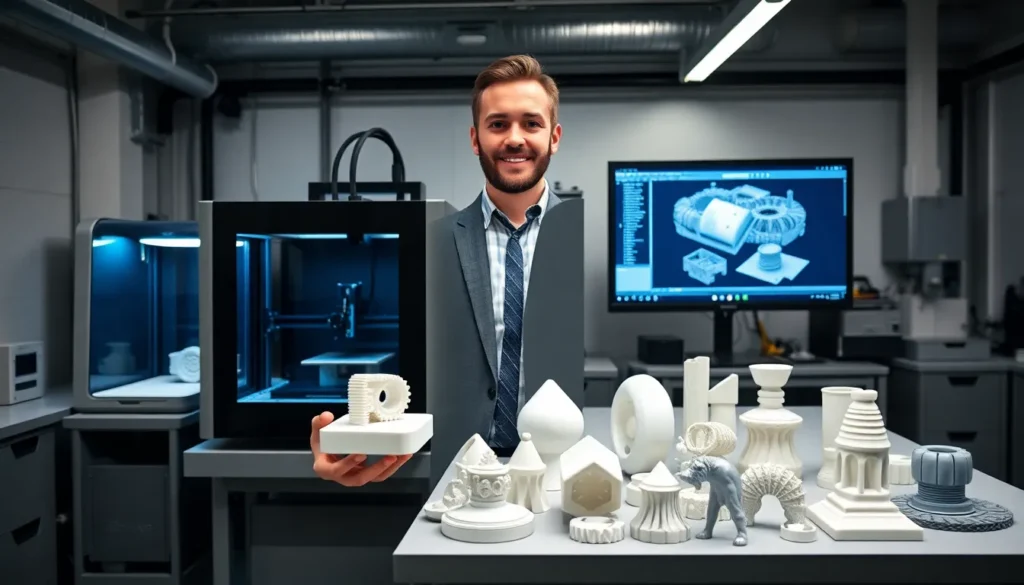
Top 3D printing has changed how people create physical objects from digital designs. The technology has moved from industrial labs into homes and small businesses. In 2025, 3D printing offers faster speeds, better materials, and more affordable machines than ever before.
This guide covers the most popular 3D printing technologies available today. It explains which printers work best for different users and budgets. Readers will learn about materials that deliver quality results and the trends shaping this industry’s future.
Table of Contents
ToggleKey Takeaways
- Top 3D printing technologies in 2025 include FDM for affordability, SLA for precision, and SLS for industrial-strength parts.
- Budget-friendly FDM printers like the Creality Ender 3 and Bambu Lab A1 Mini offer excellent value for beginners under $300.
- PLA is the easiest material to print, while PETG and ABS provide better durability for functional parts.
- Print speeds have improved dramatically, with some machines now completing jobs in under 3 hours that previously took 10 hours.
- AI-assisted slicing software and real-time failure detection are making 3D printing more accessible and reliable.
- Sustainable options like recycled filaments and closed-loop recycling systems are reducing environmental impact in the industry.
Most Popular 3D Printing Technologies
Several top 3D printing technologies dominate the market in 2025. Each method has distinct strengths that suit different applications.
Fused Deposition Modeling (FDM)
FDM remains the most common 3D printing technology for beginners and hobbyists. The process works by heating plastic filament and depositing it layer by layer. FDM printers cost less than other options and use affordable materials. They handle functional prototypes, household items, and educational projects well.
The main drawbacks include visible layer lines and slower print speeds compared to resin printers. But, recent FDM machines have improved significantly in both areas.
Stereolithography (SLA)
SLA printers use UV light to cure liquid resin into solid objects. This technology produces incredibly detailed prints with smooth surfaces. Jewelry designers, dentists, and miniature collectors favor SLA for its precision.
Resin printing requires more post-processing than FDM. Users must wash prints in alcohol and cure them under UV light. The materials also cost more per print.
Selective Laser Sintering (SLS)
SLS technology uses lasers to fuse powdered materials into solid parts. Industrial manufacturers rely on SLS for strong, functional components. The process creates parts without support structures, which saves time during post-processing.
SLS machines remain expensive for home users. But, some desktop versions have entered the market at lower price points.
Top 3D Printers for Home and Professional Use
Choosing the right 3D printer depends on budget, intended use, and experience level. Here are standout options across different categories.
Best Budget FDM Printers
The Creality Ender 3 series continues to offer excellent value under $300. These machines print reliably and have massive community support for troubleshooting. The Elegoo Neptune series provides similar quality at competitive prices.
Beginner-friendly options like the Bambu Lab A1 Mini simplify the setup process. They include automatic bed leveling and easy-to-use software.
Top Mid-Range Options
The Bambu Lab P1S stands out in the $600-$900 range. It delivers fast print speeds and enclosed printing for better temperature control. The Prusa MK4 offers exceptional reliability and open-source firmware that users can modify.
For resin printing, the Elegoo Saturn 3 produces detailed models on a large build plate. It works well for tabletop gaming enthusiasts and product designers.
Professional-Grade Machines
Professionals often choose the Formlabs Form 4 for precise SLA printing. It produces dental models, jewelry prototypes, and engineering parts. The UltiMaker S7 handles FDM production with consistent quality across long print runs.
These professional machines cost several thousand dollars but deliver results that justify the investment for businesses.
Best Materials for Quality 3D Prints
Material selection affects print quality, durability, and appearance. Top 3D printing projects require matching the right material to each application.
PLA (Polylactic Acid)
PLA dominates the FDM market as the easiest material to print. It produces low odor and doesn’t require a heated enclosure. PLA works for decorative items, prototypes, and educational models. The material biodegrades under industrial composting conditions.
Standard PLA lacks heat resistance and strength for mechanical parts. But, PLA+ variants offer improved durability.
PETG and ABS
PETG combines easy printing with better strength than PLA. It resists moisture and holds up outdoors better than standard PLA. Many users consider PETG the best all-around material for functional prints.
ABS provides superior heat resistance and impact strength. Automotive and industrial applications often require ABS. The material needs an enclosed printer and proper ventilation due to fumes.
Specialty Resins
Resin printers accept various specialty formulations. Tough resins mimic ABS properties for functional parts. Flexible resins create rubber-like objects for gaskets and grips. Castable resins burn out cleanly for jewelry and dental casting.
Engineering resins cost more but enable top 3D printing applications in professional settings. They handle heat, stress, and wear better than standard resins.
Emerging Trends Shaping the Industry
Several trends are pushing top 3D printing forward in 2025 and beyond.
Faster Print Speeds
Print speed has increased dramatically. Some consumer printers now exceed 500mm/s without sacrificing quality. Input shaping and pressure advance algorithms compensate for high-speed vibrations. What took 10 hours in 2020 now finishes in under 3 hours.
AI-Assisted Software
Slicing software now uses AI to optimize print settings automatically. These tools analyze models and suggest support placement, orientation, and speed profiles. Users spend less time tweaking settings and get better results.
Some printers include cameras that detect print failures in real time. They pause jobs when problems occur, saving material and time.
Sustainable Materials
Environmental concerns drive demand for recycled and bio-based filaments. Manufacturers now offer PLA made from agricultural waste. Recycled PETG from bottles performs well in many applications.
Some companies sell closed-loop systems that grind failed prints into new filament. This approach reduces waste and material costs for high-volume users.
Multi-Material Printing
New printers switch between multiple materials during a single job. Users create objects with different colors, textures, and properties in one print. Dissolvable support materials make complex geometries easier to produce.