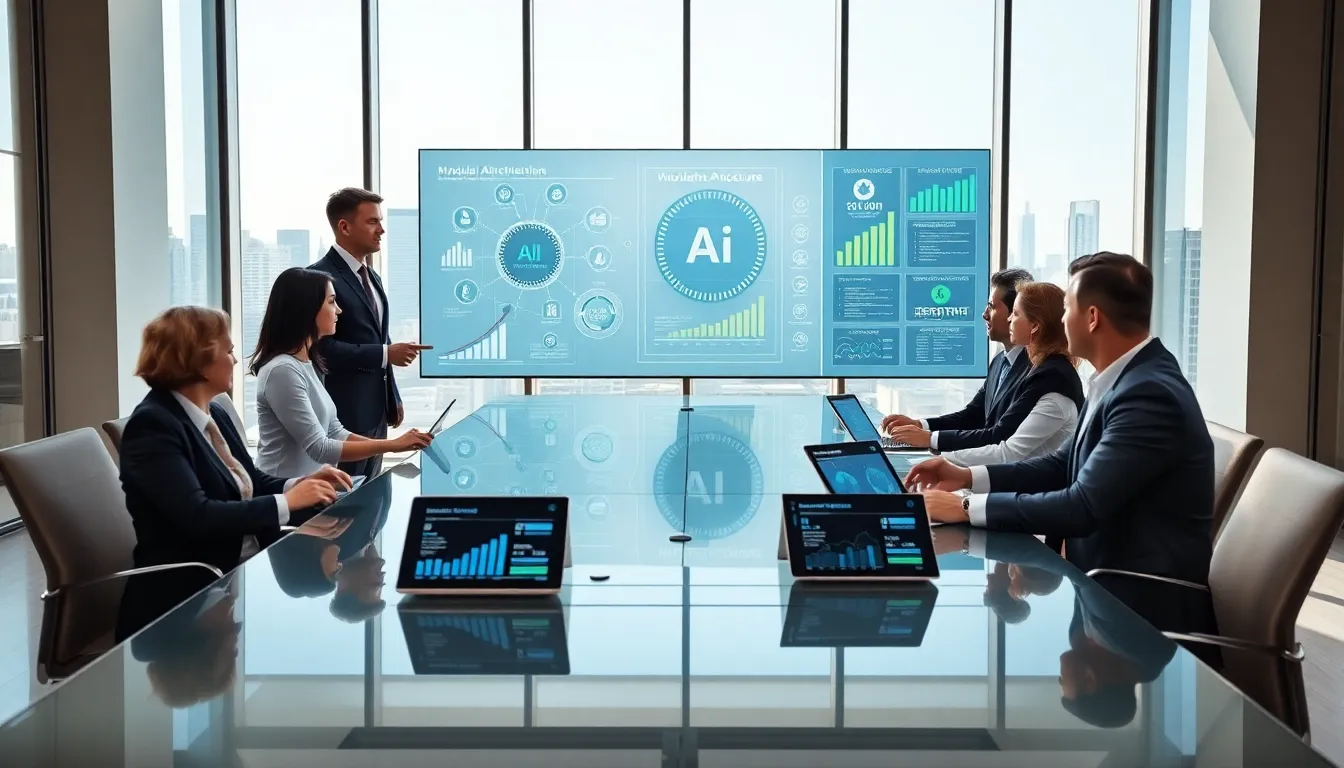

Enterprise software trends 2026 will reshape how organizations operate, compete, and grow. The coming year brings significant shifts in automation, architecture, security, and sustainability. Companies that understand these changes will position themselves ahead of competitors.
Business leaders face important decisions about technology investments. The right enterprise software choices can drive efficiency, reduce costs, and create new opportunities. This article examines the five most important enterprise software trends 2026 has in store, and explains what each means for your organization.
Table of Contents
ToggleKey Takeaways
- Enterprise software trends 2026 center on AI-driven automation, with organizations reporting 40% faster processing and 30% fewer errors.
- Composable architecture replaces monolithic systems, enabling companies to implement new features 80% faster than competitors.
- Zero-trust security becomes the standard, requiring continuous verification of every user, device, and application.
- Low-code and no-code platforms address the developer shortage, accelerating application delivery by up to 70%.
- Sustainability features are now embedded in enterprise software, with carbon tracking and energy-efficient design becoming operational priorities.
AI-Driven Automation and Intelligent Workflows
Artificial intelligence has moved from experimental to essential. In 2026, enterprise software trends show AI automation becoming a core business function rather than an optional add-on.
Intelligent workflows now handle tasks that required human intervention just two years ago. These systems process invoices, route customer inquiries, and manage inventory without manual oversight. The results speak clearly: organizations using AI-driven automation report 40% faster processing times and 30% fewer errors.
Machine learning models improve with each interaction. They learn company-specific patterns and adapt to changing conditions. A supply chain system might predict delays before they happen. A customer service platform could resolve issues before customers even notice problems.
The enterprise software trends 2026 brings include predictive analytics integrated directly into daily operations. Sales teams receive automatic alerts about at-risk accounts. HR departments get early warnings about potential turnover. Finance teams see cash flow projections updated in real time.
Smart companies aren’t just buying AI tools, they’re rebuilding processes around them. The most successful implementations start with clear goals: reduce response time by 50%, cut manual data entry by 80%, or improve forecast accuracy by 25%. Specific targets drive specific results.
The Rise of Composable Enterprise Architecture
Monolithic software systems are losing ground fast. Enterprise software trends 2026 favor composable architecture, modular systems that organizations can assemble, rearrange, and scale as needs change.
Think of it like building blocks instead of a solid concrete slab. Need a new payment processing capability? Snap in a module. Want to add a different CRM? Swap components without rebuilding everything else.
This approach solves a persistent problem. Traditional enterprise software forced companies into rigid structures. Changing one function meant disrupting the entire system. Upgrades took months. Customizations created maintenance nightmares.
Composable architecture changes the equation. APIs connect specialized components. Each piece does one thing well. Organizations mix best-in-class solutions from different vendors.
Gartner predicts that by late 2026, organizations using composable approaches will outpace competitors by 80% in new feature implementation speed. That’s a significant advantage in fast-moving markets.
The enterprise software trends 2026 presents also include packaged business capabilities (PBCs). These pre-built modules address specific functions, fraud detection, document management, customer onboarding, and plug directly into existing systems. Companies save development time while gaining proven functionality.
Enhanced Cybersecurity and Zero-Trust Models
Security breaches cost enterprises an average of $4.88 million in 2024. That number continues climbing. Enterprise software trends 2026 reflect this reality with zero-trust security becoming standard practice.
Zero-trust operates on a simple principle: trust nothing, verify everything. Every user, device, and application must prove its identity before accessing resources. Previous network location or past authentication doesn’t grant automatic trust.
This represents a fundamental shift from perimeter-based security. Old models assumed threats came from outside the network. Once inside, users moved freely. Zero-trust assumes threats exist everywhere and restricts access accordingly.
Enterprise software trends 2026 show vendors embedding zero-trust principles directly into their products. Authentication happens continuously, not just at login. Access permissions adjust based on behavior patterns. Anomalies trigger immediate restrictions.
Multi-factor authentication has become table stakes. The leading enterprise software now adds behavioral biometrics, device health checks, and real-time risk scoring. These layers work together to stop threats before they cause damage.
Organizations also invest in security automation. AI-powered systems detect and respond to threats faster than human analysts. They correlate data from multiple sources, identify attack patterns, and initiate countermeasures within seconds.
Low-Code and No-Code Platform Expansion
The developer shortage isn’t going away. Enterprise software trends 2026 address this gap through low-code and no-code platforms that empower business users to build applications themselves.
These platforms use visual interfaces instead of programming languages. Users drag and drop components, configure workflows, and create functional applications without writing code. A marketing manager can build a campaign tracking tool. An operations lead can create a custom scheduling system.
The market reflects this shift. Forrester projects the low-code market will reach $50 billion by 2026. Enterprise software trends 2026 show major vendors adding low-code capabilities to their core platforms.
But low-code doesn’t mean low-quality. Modern platforms include governance controls, security features, and integration capabilities. IT departments maintain oversight while business units gain speed.
The enterprise software trends 2026 introduces also include AI-assisted development within low-code platforms. Users describe what they want in plain language. The system generates the application structure, suggests improvements, and handles technical details.
This democratization of software development accelerates digital transformation. Companies report 70% faster application delivery when citizen developers supplement IT teams. Projects that once waited months in development queues now launch in weeks.
Sustainability and Green IT Initiatives
Environmental responsibility has moved from corporate PR to operational priority. Enterprise software trends 2026 include significant focus on sustainability and energy efficiency.
Data centers consume enormous amounts of electricity. A single large facility can use as much power as 80,000 homes. Organizations face pressure from regulators, investors, and customers to reduce their digital carbon footprint.
Enterprise software vendors respond with energy-efficient solutions. Cloud providers optimize workloads to minimize power consumption. Software architects design applications that require fewer computing resources.
The enterprise software trends 2026 brings also include carbon tracking built into business applications. Finance teams see emissions data alongside cost reports. Supply chain systems calculate environmental impact automatically. Procurement platforms factor sustainability into vendor scoring.
Green coding practices gain traction. Developers optimize algorithms for efficiency, not just speed. They eliminate redundant processes and reduce data storage requirements. Small improvements at scale produce measurable environmental benefits.
Regulatory requirements drive adoption. The EU’s Corporate Sustainability Reporting Directive affects companies worldwide. Organizations need enterprise software that tracks, reports, and verifies sustainability metrics.