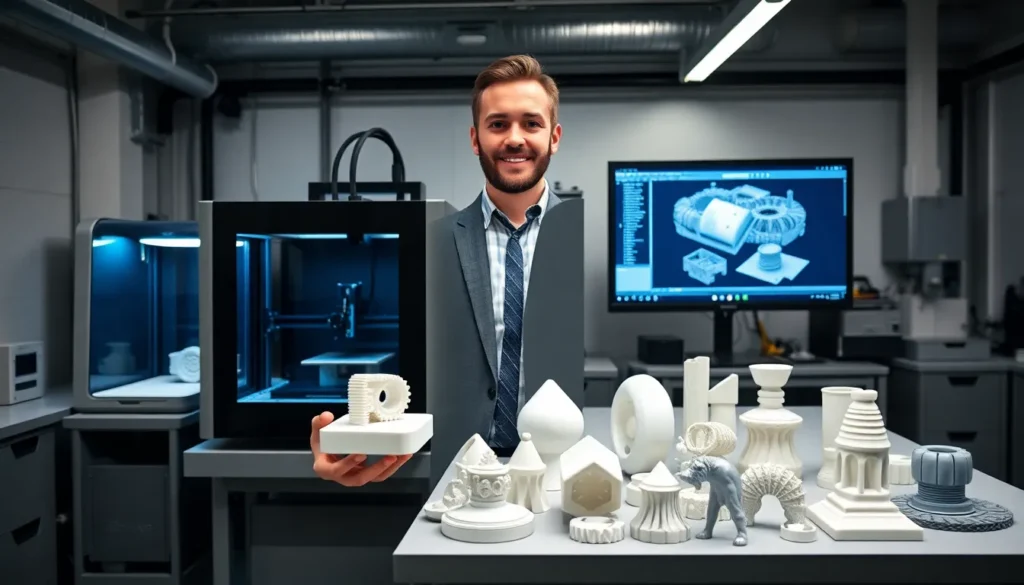
The 3D printing trends 2026 will bring mark a turning point for the industry. Faster machines, smarter software, and greener materials are reshaping how businesses and hobbyists approach additive manufacturing. From AI-driven design tools to bioprinted organs, the coming year promises advances that were science fiction just a decade ago.
This article breaks down the key 3D printing trends 2026 has in store. Readers will learn which technologies are gaining traction, where investment is flowing, and how these shifts affect everyone from industrial manufacturers to home users. Whether someone runs a production line or tinkers in a garage, these developments deserve attention.
Table of Contents
ToggleKey Takeaways
- AI-powered design tools and automation are revolutionizing 3D printing trends 2026, enabling faster production with fewer errors and lower labor costs.
- Sustainable materials—including recycled filaments and bio-based options from algae and hemp—are becoming industry standard as companies prioritize eco-friendly printing.
- Bioprinting breakthroughs are moving from labs to clinics, with skin grafts and cartilage repair entering advanced trials while full organ printing continues to advance.
- Metal 3D printing with multi-laser systems now enables end-use production at scale for aerospace and automotive industries, not just prototyping.
- Desktop printers under $500 now deliver professional-quality results, making 3D printing trends 2026 accessible to hobbyists and educators alike.
- Digital inventories and on-demand printing are reshaping supply chains, allowing companies to reduce warehouse costs and respond faster to disruptions.
AI-Powered Design and Automation
Artificial intelligence is changing 3D printing from the ground up. In 2026, expect AI tools to handle tasks that once required hours of manual work. Generative design software now creates optimized part geometries in minutes. Engineers input constraints, weight limits, stress tolerances, material choices, and the AI delivers print-ready files.
This shift does more than save time. AI-generated designs often outperform human-made versions. They use less material while maintaining strength. They reduce print failures by predicting weak points before production begins.
3D printing trends 2026 also include smarter automation on the factory floor. Robotic arms now load and unload print beds without human intervention. Machine learning algorithms monitor print quality in real time, pausing jobs when defects appear. These systems learn from every print, improving accuracy over time.
For businesses, AI integration means lower labor costs and faster turnaround. A single operator can oversee dozens of machines. Small and mid-sized companies gain access to capabilities that once required dedicated engineering teams. The barrier to entry drops, and competition heats up.
Sustainable Materials and Eco-Friendly Printing
Sustainability dominates conversations about 3D printing trends 2026. The industry is moving away from petroleum-based plastics toward greener alternatives.
Recycled filaments now match the quality of virgin materials. Companies offer spools made entirely from post-consumer waste. Some manufacturers accept used prints for reprocessing, creating closed-loop systems.
Bio-based materials are expanding beyond PLA. New filaments use algae, hemp, and agricultural waste as feedstocks. These options break down faster in composting environments and produce fewer emissions during manufacturing.
Printer efficiency matters too. Newer machines consume less energy per part. Heated beds reach temperature faster. Insulated chambers retain heat better, cutting electricity use by 20-30% compared to older models.
3D printing trends 2026 show corporations prioritizing carbon footprint reduction. Large buyers now require sustainability certifications from suppliers. Printers that can document their environmental impact gain a competitive edge. This pressure flows down the supply chain, pushing material producers and hardware makers toward cleaner practices.
Healthcare and Bioprinting Breakthroughs
Medical applications represent some of the most exciting 3D printing trends 2026 will deliver. Bioprinting, creating living tissue layer by layer, is moving from labs into clinical settings.
Skin grafts printed from patient cells are now in advanced trials. These grafts reduce rejection risks and heal faster than traditional alternatives. Cartilage printing for joint repair shows similar promise. Early results suggest printed cartilage integrates better with existing tissue.
Organ printing remains years from widespread use, but progress accelerates. Researchers have printed functional kidney tissue that filters blood. Liver tissue that metabolizes drugs has survived for months in test environments. Each success brings full organ replacement closer to reality.
Beyond bioprinting, 3D printing trends 2026 include personalized medical devices. Prosthetics fit better because they’re built from patient scans. Surgical guides printed hours before operations improve precision. Dental aligners and hearing aids already rely heavily on additive manufacturing.
Hospitals are installing on-site printing facilities. This reduces wait times for custom devices and cuts shipping costs. Emergency rooms can produce splints and casts matched to individual injuries within hours.
Manufacturing at Scale: From Prototypes to Production
For years, 3D printing served mainly for prototyping. That’s changing fast. Among the major 3D printing trends 2026 brings is the shift toward end-use production.
Metal printing leads this charge. New powder-bed fusion systems produce parts with properties matching or exceeding traditional casting. Aerospace companies print jet engine components. Automotive manufacturers produce lightweight brackets and housings in volume.
Speed improvements make production viable. Multi-laser systems cut print times dramatically. Some machines now run 4-8 lasers simultaneously, multiplying output without sacrificing quality.
Cost per part continues to fall. Material prices drop as demand grows. Machines require less maintenance. Software reduces waste by optimizing part placement and support structures.
3D printing trends 2026 show hybrid manufacturing gaining ground. Shops combine additive and subtractive processes. They print near-net shapes, then machine critical surfaces to tight tolerances. This approach uses the strengths of both methods.
Supply chain resilience drives adoption too. Companies burned by pandemic-era disruptions now keep digital inventories. They print replacement parts on demand rather than stockpiling physical inventory. This flexibility reduces warehouse costs and speeds repairs.
Consumer Accessibility and Desktop Innovation
The 3D printing trends 2026 presents aren’t limited to industry. Home users benefit from major advances too.
Desktop printers now offer quality that rivals machines costing ten times more just five years ago. Sub-$500 printers produce detailed models with excellent layer adhesion. Multi-material systems let hobbyists print in multiple colors or combine rigid and flexible materials in single objects.
User experience improves across the board. Auto-leveling beds eliminate a common frustration. Filament sensors pause prints before running dry. Cloud-based slicing software handles complex settings automatically.
The 3D printing trends 2026 showcases include better connectivity. Printers integrate with smart home systems. Users start jobs from their phones, monitor progress via cameras, and receive alerts when prints finish.
Content libraries expand access. Designers sell ready-to-print files through online marketplaces. Beginners find free models for household items, toys, and replacement parts. The gap between wanting something printed and actually printing it shrinks every month.
Education adoption accelerates. Schools add printers to makerspaces and STEM labs. Students learn design thinking and problem-solving through hands-on projects. These skills translate directly to workforce readiness.