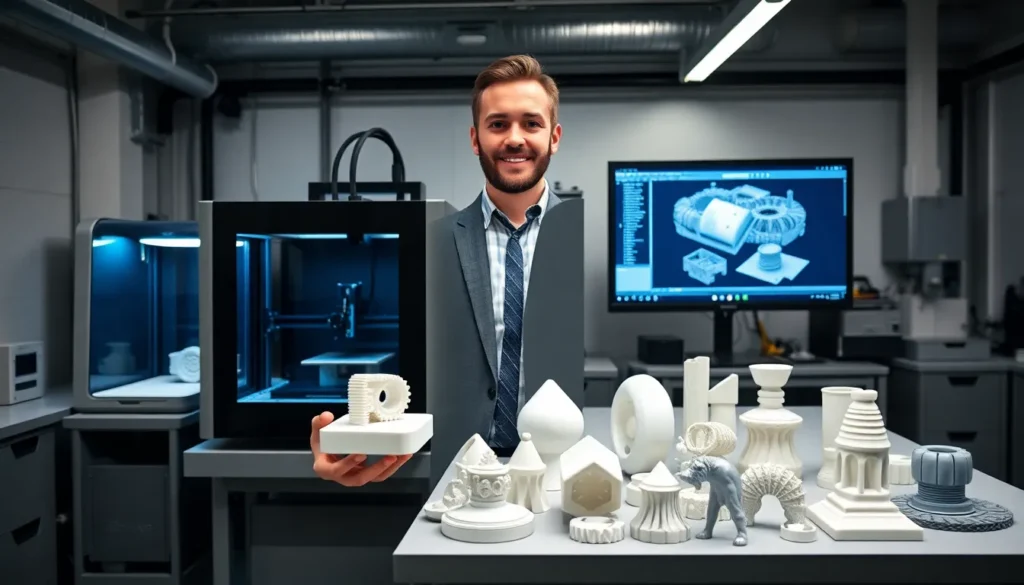
3D printing examples now span nearly every major industry, from hospitals producing custom implants to aerospace companies building lighter aircraft components. This technology, also called additive manufacturing, creates three-dimensional objects by layering materials based on digital designs. What started as a prototyping tool has become a production powerhouse.
The global 3D printing market reached $18.3 billion in 2023 and continues to grow rapidly. Companies use this technology to cut costs, speed up production, and create parts that traditional manufacturing simply cannot produce. Patients receive personalized medical devices. Engineers test designs in days instead of months. Architects build scale models with stunning precision.
This article explores real 3D printing examples across six key sectors. Each section highlights specific applications, recent developments, and the practical benefits driving adoption. Whether someone works in manufacturing, healthcare, or simply wants to understand this technology better, these examples show why 3D printing has moved from novelty to necessity.
Table of Contents
ToggleKey Takeaways
- 3D printing examples span healthcare, manufacturing, aerospace, and construction, proving the technology has evolved from prototyping to full-scale production.
- Medical applications include custom prosthetics costing under $50, surgical planning models that reduce procedure times by 25%, and bioprinted tissue for wound treatment.
- Manufacturers use 3D printing for rapid prototyping, on-demand tooling, and end-use parts production—eliminating weeks of wait time and reducing inventory costs.
- Construction companies now print habitable homes in under 48 hours, addressing housing affordability and labor shortage challenges.
- Aerospace leaders like GE Aviation and SpaceX use 3D printed components to reduce weight, improve fuel efficiency, and simplify complex assemblies.
- Consumer products from customized jewelry to 3D printed sneaker midsoles show how the technology enables personalization that mass production cannot achieve.
Healthcare and Medical Applications
Healthcare offers some of the most impressive 3D printing examples in use today. Medical professionals use this technology to save lives, improve patient outcomes, and reduce surgical risks.
Custom Prosthetics and Orthotics
Traditional prosthetics require weeks of fitting and adjustment. 3D printing cuts this timeline dramatically. Clinicians scan a patient’s limb, create a digital model, and print a custom-fitted prosthetic in days. The cost drops significantly too, some 3D printed prosthetic hands cost under $50 to produce.
Orthotic devices like braces and insoles benefit from the same approach. Each piece matches the patient’s exact anatomy, improving comfort and effectiveness.
Surgical Planning Models
Surgeons now print exact replicas of patient organs before complex procedures. A cardiac surgeon might hold a 3D printed model of a patient’s heart, planning incisions and identifying potential complications. This preparation reduces operating time and improves success rates.
Hospitals report that surgical planning models have cut certain procedure times by 25% or more. Patients spend less time under anesthesia, and surgeons approach each case with greater confidence.
Bioprinting and Tissue Engineering
Researchers are printing living tissue using bioinks made from human cells. While full organ printing remains years away, scientists have successfully printed skin grafts, cartilage, and blood vessels. Some burn centers already use 3D printed skin for wound treatment.
These 3D printing examples point toward a future where organ transplant waiting lists might shrink dramatically.
Manufacturing and Industrial Uses
Manufacturing represents the largest sector for 3D printing applications. Factories worldwide use this technology for prototyping, tooling, and direct production.
Rapid Prototyping
Product designers iterate faster with 3D printing. A team can design a part on Monday, print it Tuesday, test it Wednesday, and refine the design by Friday. Traditional prototyping through machine shops might take weeks for the same process.
This speed advantage compounds across development cycles. Companies bring products to market faster and catch design flaws earlier.
Production Tooling and Jigs
Factories need custom jigs, fixtures, and assembly aids. 3D printing produces these tools on demand, often overnight. When a tool breaks or needs modification, workers print a replacement instead of waiting for outside suppliers.
Automotive plants use 3D printed assembly aids extensively. These custom tools help workers position parts correctly and complete tasks ergonomically.
End-Use Parts Production
3D printing now produces final products, not just prototypes. Metal 3D printing creates durable parts for machinery, vehicles, and industrial equipment. The technology excels at low-volume production where traditional tooling costs would be prohibitive.
Spare parts represent another growing application. Instead of warehousing thousands of replacement components, manufacturers print parts as needed. This approach reduces inventory costs and ensures availability for older equipment.
Architecture and Construction Projects
Architecture firms and construction companies have embraced 3D printing for both design visualization and actual building construction.
Scale Models and Presentations
Architects print detailed scale models of proposed buildings. These physical models help clients visualize projects far better than computer renderings alone. Complex geometries that would take weeks to build by hand print in hours.
Urban planners use 3D printing to create city block models showing how new developments fit existing neighborhoods. These presentations improve public engagement and planning decisions.
3D Printed Buildings
Full-scale construction 3D printing has moved from concept to reality. Companies like ICON and Apis Cor have printed habitable homes using specialized concrete printers. A 3D printed house can take shape in under 48 hours of print time.
These 3D printing examples address housing affordability challenges. Construction costs drop when machines do the heavy lifting. Labor shortages matter less when a printer works around the clock.
Custom Architectural Components
Beyond whole buildings, 3D printing produces decorative facades, unique structural elements, and custom fixtures. Designers create shapes impossible to achieve through conventional construction methods. The technology enables architectural creativity without budget-breaking custom fabrication costs.
Consumer Products and Everyday Items
3D printing has entered homes and retail spaces, producing products people use daily.
Customized Fashion and Accessories
Jewelry designers use 3D printing to create intricate pieces that traditional metalworking cannot achieve. Customers order custom rings, pendants, and earrings designed specifically for them. Eyewear companies offer 3D printed frames fitted to individual face measurements.
Sneaker brands have introduced 3D printed midsoles. Adidas and New Balance sell shoes with lattice structures optimized for performance and comfort. These soles provide cushioning characteristics impossible with foam alone.
Home Goods and Decor
Consumers purchase 3D printed lamps, vases, phone cases, and furniture. The technology enables small-batch production of unique designs. Artists and designers sell items through platforms like Etsy without maintaining large inventories.
Home improvement stores stock 3D printed replacement parts for appliances and fixtures. Customers find handles, knobs, and brackets that manufacturers discontinued years ago.
Personalized Products
These 3D printing examples highlight personalization as a key consumer benefit. People order items with custom text, fitted to their measurements, or modified to their preferences. Mass production cannot match this level of individual attention.
Aerospace and Automotive Innovations
Aerospace and automotive industries push 3D printing technology to its limits, demanding high performance from every printed part.
Lightweight Aircraft Components
Airplane manufacturers use 3D printing to reduce weight. GE Aviation prints fuel nozzles for jet engines, each nozzle weighs 25% less than its traditionally manufactured predecessor. Across an entire aircraft, these savings translate to significant fuel efficiency improvements.
Airbus uses 3D printed brackets, hinges, and interior components throughout its aircraft. Boeing prints similar parts. Every ounce matters when calculating fuel costs over millions of flight miles.
Rocket and Satellite Parts
SpaceX, Relativity Space, and other rocket companies rely heavily on 3D printing. Relativity Space aims to print 85% of its rockets. The technology produces complex engine components that would otherwise require assembling dozens of separate pieces.
Satellite manufacturers print antenna arrays and structural components. The design freedom allows engineers to optimize parts for the harsh space environment.
Automotive Applications
Car manufacturers prototype new designs using 3D printing constantly. But production applications have expanded too. Bugatti prints titanium brake calipers. BMW produces thousands of 3D printed parts across its vehicle lineup.
Electric vehicle companies use 3D printing to accelerate development timelines. Startups print prototype parts in-house instead of relying on supplier tooling. This speed helps smaller companies compete against established manufacturers.
These 3D printing examples from aerospace and automotive sectors demonstrate how the technology handles demanding applications where failure is not an option.